



The article analyzes how to identify potential cell damage or cell leakage in lithium solar batteries. Regardless of the type, lithium solar batteries are essential for temporarily storing the energy collected from solar panels. However, damaged cells or leaking batteries will become less efficient, unsafe, and result in lost profits. Problems batteries can exhibit include swelling or bulging of the casing, overheating, loss of capacity, leakage of fluid, and strange sounds. These can be identified through visual inspections, thermal imaging for heat, voltage and performance measurements, and system performance tests. Regular maintenance, good quality batteries, controlled temperature, and good ventilation can lower the risk of damage. If damage or leakage is found, the first priority is safety. Use protective gear and dispose or recycle the battery using proper protective gear. Following these recommendations will extend the life of the system, optimize your investment in solar energy, and keep the system safe. In this article, we explore How to Detect Cell Damage or Leakage in Lithium Solar Batteries.
Why Detecting Lithium Battery Cell Damage is Critical
A lithium solar battery is a reveloutionary device that provides the means of storing surplus energy developed from solar panels for use at later times, such as energy stored in an inverter battery. These batteries are designed to last and to be safe, but in time, like all batteries, they tend to develop certain faults. The early detection of damages in lithium-ion battery cells extends not only the life of your system but also protects personnel and property from possible hazards of fire or chemical leakage.
Safety First: Knowing the Risks-Battery Swelling and Leakage Warning Signs
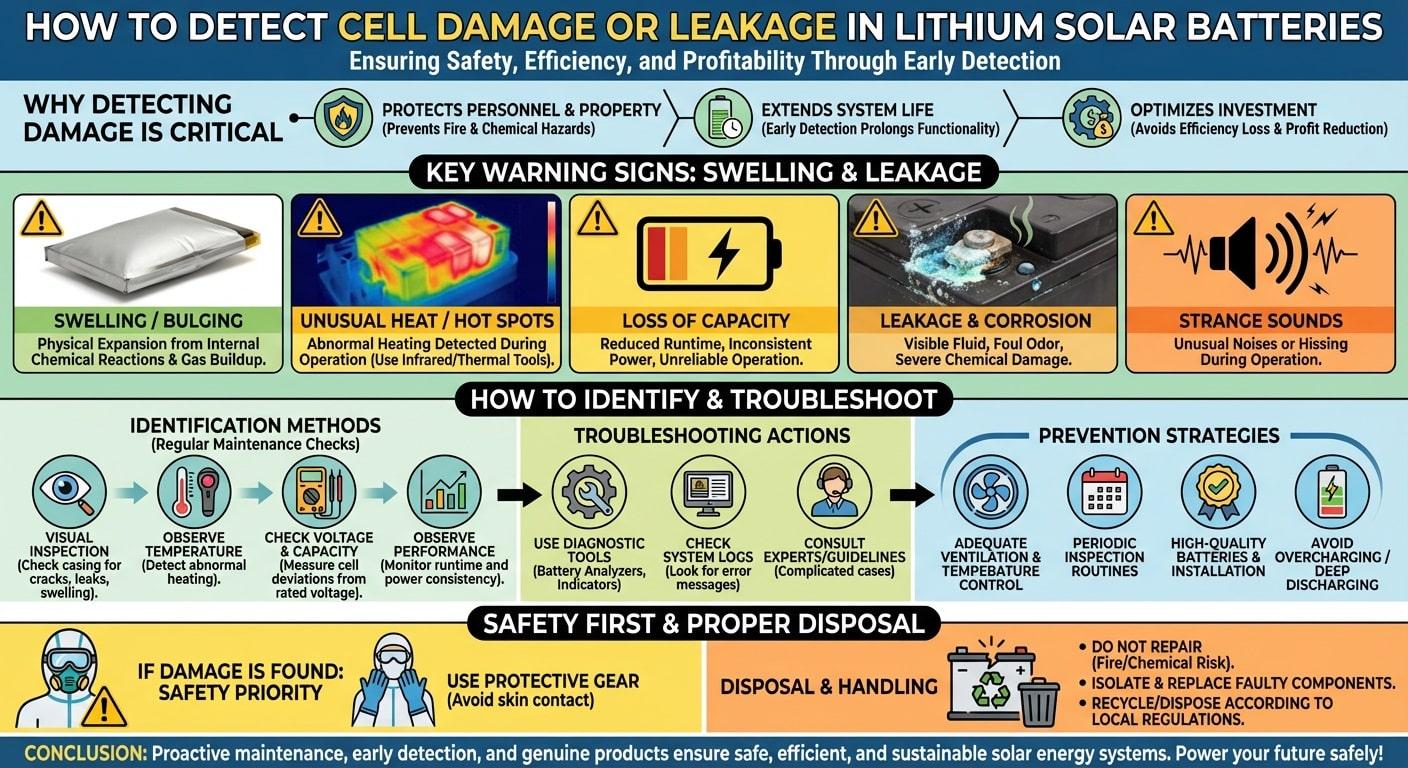
The general warning signals in case of malfunctioning lithium solar batteries are swelling and leakage. Swelling usually occurs owing to internal chemical reactions, which in turn may produce gases responsible for the physical expansion. In the case when you find your solar panel lithium battery or Growatt lithium battery damaged by such an indication as bulging or deformation, then definitely, that is a signal for something not being right. Leakage, often characterized by a foul smell and/or visible fluid, can denote severe damage and the possibility of hazardous chemical release.
Key Signs to Look Out For
- Swelling or bulging of the battery casing.
- Unusual heat or hot spots when operating.
- Operating with reduced battery capacity, or not operating reliably.
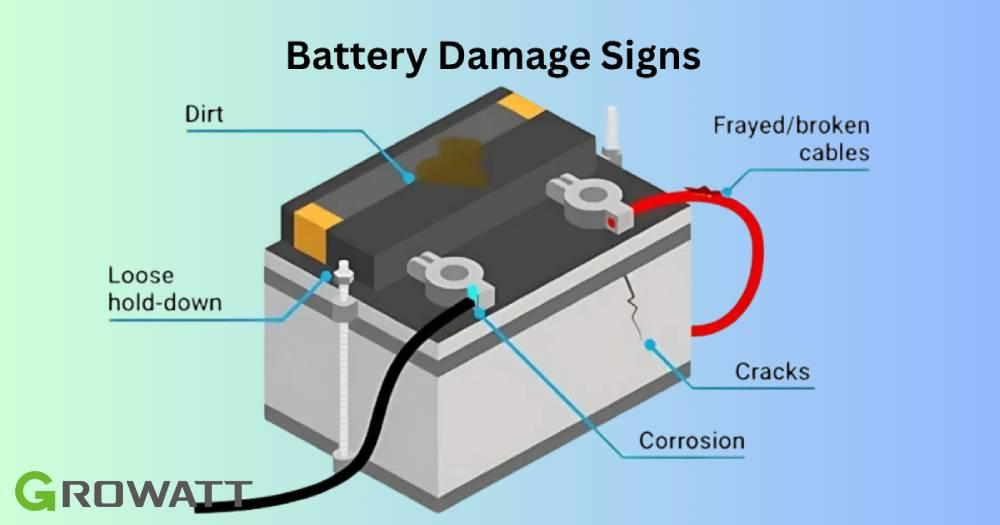
- Corrosion or liquid leakage around the terminals.
- Unusual noises or hissing during operation.
How to Identify a Damaged Lithium Battery Cell
Regular maintenance checking is very important. Here is how you should go about it:
1. Visual Inspection:
Carefully check the battery casing for swelling, cracks, or leaks. This is most true for solar inverter lithium batteries or any high-performance variant, as these are usually the points of wear.
2. Observe temperature:
Infrared thermometers and thermal cameras can detect abnormal heating that may indicate internal damage or faulty cells.
3. Check the Voltage and Capacity:
The voltage for each cell and module should be measured. Large deviations from the rated voltage are indicative of faulty battery cells in solar systems.
4. Observe performance:
If you find that your system is showing less runtime or inconsistent power output, then the probable problem may be lithium solar battery leakage detection or internal cell failure.
How to Troubleshoot Solar Battery Issues
The time and money you invest in effective troubleshooting will come back manifold each time a problem does crop up. Learn to detect damages in the lithium battery cells using the above steps to start with. Safe handling of damaged lithium batteries is one way to avoid accidents or further deterioration when there are signs of damage. Sometimes, the problem may lie in a module or even a cell. When possible, use growatt inverter dubai damage indicators tool or a diagnostic application. The complicated cases are best referred for guidance from manufacturer guidelines or expert technicians.
Prevention of Battery Damage in Solar Systems
Prevention is always better than cure. Proper maintenance check routines for solar lithium batteries will go a long way in minimizing the risk of damage: adequate ventilation and temperature control, besides periodic inspection. Installation of high-quality solar panel inverter battery systems with their built-in safety features also helps. Just remember that prevention of solar system battery damage can be achieved by adhering to recommendations given by the manufacturer and avoiding overcharging or deep discharging.
Proper Handling and Disposal
If your inspection does reveal one or more batteries compromised by either damage or leakage, give first priority to the safe handling of damaged lithium batteries by using protection gear for avoiding skin contact with the leaked chemicals, and then dispose or recycle according to local regulations. Never try to repair a defective battery; there is a possibility of possible fire hazards or chemical exposure.
Identifying Faulty Battery Cells in Solar Systems
Large-scale installations of solar systems will need testing to be conducted to identify which cells of the battery are faulty. Testing with professional battery analyzers and diagnostic tools will go a long way in identifying weak or damaged cells. Pay more heed to Growatt lithium battery damage indications, as abnormal voltage drops and internal resistance increase demonstrate the failure of cells.
How to Use Troubleshooting to Maintain System Reliability
Performing regular troubleshooting will enable you to locate these problems much in advance. Check lithium solar batteries for leakage indications and check the system logs for any error messages. Upon detection of signals of battery swelling and leakage, take swift action to isolate and replace the faulty component so that further damage may be prevented.
Conclusion
A better understanding of how to identify lithium battery cell damage will help business owners and professionals alike in the solar industry maintain system reliability and overall safety. These scheduled routine checks in your maintenance of solar lithium batteries, combined with awareness of their swelling and warning leakage signs and proper handling of lithium batteries already damaged, are hands down the best tool you have in preventing battery damage within solar systems.
Early detection and timely action prolong the life of your solar lithium battery or Growatt inverter lithium battery while protecting investments and personnel. Understanding Growatt lithium battery damage indications will let you tell when to use effective troubleshooting techniques so that your solar solutions remain safe, efficient, and profitable for many years to come.
In case you need to source new batteries or are looking for replacements, always go for genuine goods from trusted suppliers that have valid warranties. You will then be assured of quality and can finally have peace of mind, especially with huge industrial or commercial installations in your locality.
Always be proactive; stay safe and power your future sustainably!
