


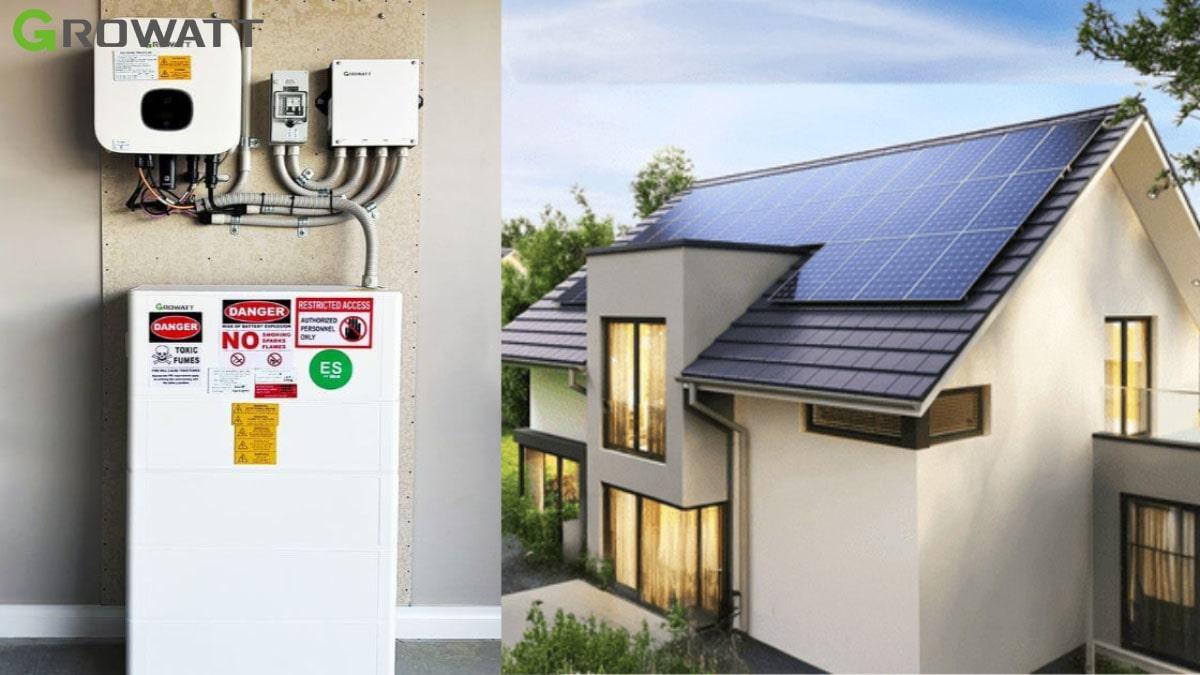
Lithium batteries are now the most commonly used type of battery in homes due to their energy efficiency, long life spans, small scale, and low maintenance unlike alternative lead-acid batteries which are bulkier and don’t store as much energy and also actively lose solar energy through inefficient charge and discharge cycling. Unfortunately, energy lithium batteries are also quite expensive, sensitive to temperature, difficult to integrate into current systems, and suffer from supply chain issues. Fortunately, lithium batteries are cost-effective and reliable as many of the issues listed above can be resolved by working with recognized companies and getting the installation done correctly. At the end of the day, lithium batteries are an available and reliable energy storage option for homes with solar systems.
Why Solar Lithium Batteries are Popular in Home Application
Over the past decade, most regions of the world have been gaining momentum toward renewable sources of energy. To homeowners, especially in busy industrial cities, an investment in solar energy systems acts as an avenue for cost reduction and a promise towards energy independence, hence contributing to environmental sustainability. Among several components that make up the modern solar energy setup, solar lithium batteries are arising as one of the main game-changing components with numerous advantages over conventional storage options.
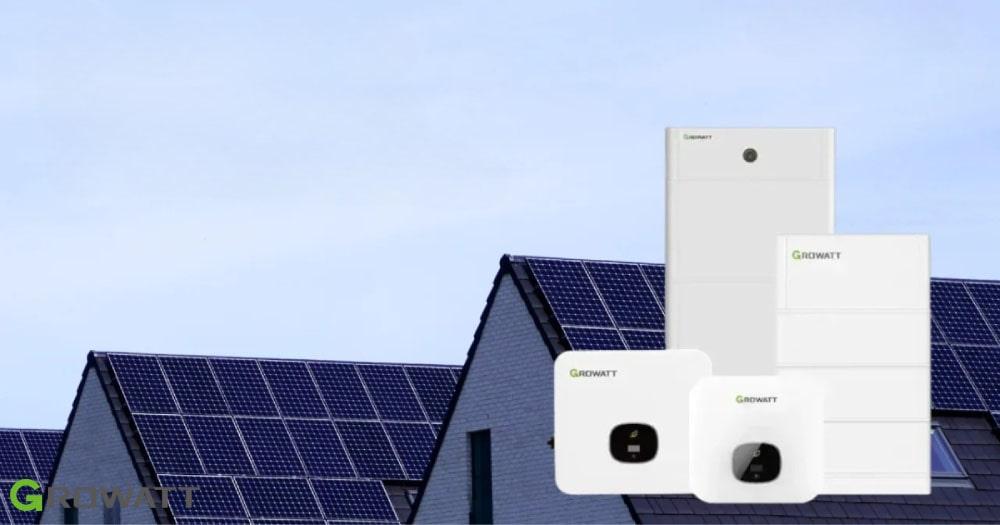
Advantages of Using Lithium Batteries in Home Solar Systems
1. Higher Energy Density with Compact Size
Some major advantages include the fact that solar lithium batteries are high in energy density, which means they can hold a larger amount of power in one small and lightweight package. It is a big plus when your space is limited. You can install a strong battery bank without having to sacrifice so much room; thus, it’s suitable even for urban houses where space is at a premium.
2. Longer Life-Span and Durability
On the whole, lithium solar panel batteries from either Growatt or other reputable brands could last for more than 10 years if good maintenance is performed. They support many charge and discharge cycles, hence they are very economical in the long run. That would mean one could be assured of a home with a reliable energy system for many years ahead.
3. Faster Charging and Discharging
These are lithium batteries that charge and discharge much faster compared to regular ones. In other words, a quicker response will have your home optimizing the use of solar power the very moment there is a fluctuation in energy demand or supply. That may prove most helpful to a busy owner or contractor.
4. Reduced Maintenance Requirement
Additionally, these lithium solar batteries require very little maintenance compared to lead acid batteries, for example, in terms of watering. Ownership is also made easy by less operational overhead that will be important for tourists and busy owners.
5. Improved Safety Features
Indeed, various inclusions of safety in modern batteries ensure thermal management, inherent overcharge, over-discharge, and short-circuit protection for the reassurance of both homeowners and installers.
6. Scalability & Modular Design
Most Growatt inverter lithium battery systems are modular, hence allowing for easy addition to energy storage anytime needs increase. This kind of flexibility will be important for industrial or commercial households that could be considering an upgrade soon.
Disadvantages of Using Solar Lithium Batteries for Home
1. Higher Initial Cost
Notwithstanding the many advantages, the upfront cost of solar lithium batteries is higher in value compared to the lead acid variety. That may be a factor of no great concern to a high-income homeowner in Iran, Iraq, or the UAE; it could make the budget-conscious buyer take a step back. These are some of the trade-offs that will be important to balance against in terms of long-term savings and reliability.
2. Supply Chain and Warranty Issues
While well-known brands like Growatt sell genuine products with valid warranties, a few counterfeit products or low-quality products may find their way into the market. The buyer should make sure that they will buy from an authorized agency or a trusted supplier so that there is no problem as far as authenticity and after-sales service is concerned.
3. Temperature-Sensitive
Other factors that influence Li-ion batteries’ performance and life cycle include extreme heat conditions. Installation with proper cooling will extend the life of the batteries in extremely hot climates, a typical scenario in the Middle East.
4. Environmental Considerations
Lithium batteries are ‘greener’ than lead-acid batteries, but the mining and processing of the materials involved in their production have ecological impacts. Proper disposal or recycling will help reduce the potential environmental impacts.
5.Complexity of System Integration
Solar lithium batteries are integrated with the existing or new inverter batteries of solar panels, and that has to be at the technical level. Compatibility and system design should be impeccable for the complete performance of the overall system by contractors or major equipment sellers.
Lithium vs. Lead-Acid Batteries for Home Solar Systems
Energy storage was always debated between lithium and lead-acid batteries. Applications go for lead-acid batteries conventionally because of their lower upfront cost, while lately, the applications are rapidly shifting toward lithium batteries.
Cost and Life Cycle: The initial cost of a lead-acid battery is normally low, but it has a rather short life, often within the range of 3 to 5 years, and requires high maintenance costs.
Solar lithium batteries will last longer, sometimes over a period of more than 10 years, with minimal maintenance, which makes them much more cost-effective through the life of the battery.
Efficiency: The charge/discharge efficiency is higher in lithium batteries, which implies that less energy will be lost during storage and retrieval. That translates to more utilization of your solar power.
Size and Weight: Lithium batteries save space and weight and are easier to install, especially in cities or areas where space commands a premium.
Safety and Maintenance: New-generation lithium batteries boast several safety features and require virtually no maintenance, while lead-acid batteries require periodic refilling and checking.
Environmental Impact: Both leave an environmental footprint, though lithium batteries are considered far greener when operating, provided that proper recycling methods are followed at their end of life.
Comparison of Pros and Cons of Solar Lithium Batteries for Home Use
| Feature | Solar Lithium Batteries | Explanation |
| Lifespan | Very long | Typically over 10 years or 5,000–10,000 charge cycles |
| Charging & discharging efficiency | High | Less energy loss compared to lead-acid batteries |
| Maintenance requirements | Very low | No watering or frequent servicing required |
| Size and weight | Compact and lightweight | Ideal for homes with limited installation space |
| Charging speed | Fast | Quickly responds to changes in energy demand |
| Safety features | Advanced | Built-in protection against overcharge, over-discharge, and short circuits |
| Initial cost | Higher | Higher upfront investment compared to traditional batteries |
| Temperature sensitivity | Moderate to high | Requires proper ventilation in hot climates |
| Scalability | High | Modular design allows easy future capacity expansion |
| System compatibility | High | Compatible with modern inverters such as Growatt |
How long does a lithium solar battery last?
Usually, such batteries are rated to last up to 5,000 to 10,000 charge cycles, depending on their quality and brand. In a well-maintained system from a reliable manufacturer like Growatt, you should expect the battery to last for about 10 years or more. Factors that may affect life-span include:
Depth of Discharge: Drawing discharges on a regular basis up to full capacity will shorten the life of the battery. By maintaining the Depth of Discharge at a reasonable value-around 80% a great deal is contributed to the life of the battery.
Temperature Management: Too much heat curtails the life of lithium batteries, as earlier suggested. Proper cooling and installation practices are indispensable. High-quality batteries with good manufacturing standards and strong safety features surely last longer.
Maintenance and Use: Manufacturer instructions are to be followed, avoiding overcharge or deep discharge in order to preserve health.
Are Lithium Batteries a Worthwhile Investment for Home Use?
Considering that these are way more expensive upfront, many wonder whether the lithium batteries are worth the investment. That really depends on what one is trying to achieve and their needs over an extended period.
It means that for busy factory owners, solar panel distributors, and contractors throughout the Middle East, it’s clear: with increased efficiency comes increased lifespan and scalability for solar lithium batteries, which will eventually make them very attractive. Besides this, in such crucial energy infrastructure investment, reliability and safety features instill confidence in brands like Growatt inverter lithium battery.
The capacity increase over time is helpful if energy demand increases and during future expansion. However, the purchase has to be from a recognized supplier who will ensure good quality products with valid warranties, hence protecting the investment and ensuring after-sales service. It is always going to be better to buy it directly from the main agencies, verifying properly by making scans or videos of the agency certificates not to sell counterfeit goods, and getting quality as promised.
Conclusion: Weighing the Pros and Cons
In a nutshell, solar lithium batteries are the ultimate solution for residential energy storage, especially for high-value customers in Iran, Iraq, UAE, and Syria, whereby great importance is attached to quality, durability, and efficiency.
Combining a solar panel inverter battery with a solar panel lithium battery offers the most optimized, scalable, and sustainable energy system in line with career professionals’ and business owners’ interests. Although it may be costly to invest in initially, long-term benefits accruing from extended life spans, fast charging times, less maintenance, and safety justify why the solar lithium battery has become exemplary for home solar systems based on reliability and high performance.
Frequently Asked Questions (FAQ)
Yes, solar lithium batteries are well suited for home use due to their high efficiency, long lifespan, compact size, and low maintenance requirements.
Solar lithium batteries offer longer lifespan, higher efficiency, faster charging, lighter weight, and require significantly less maintenance than lead-acid batteries.
The main drawback is the higher initial cost compared to lead-acid batteries, although long-term savings often offset this expense.
Most solar lithium batteries last between 10 to 15 years or around 5,000 to 10,000 charge cycles, depending on usage and maintenance.
Maintenance requirements are minimal, but periodic monitoring of temperature, state of charge, and system performance is recommended. Are solar lithium batteries suitable for home use?
What are the main advantages of solar lithium batteries over lead-acid batteries?
What is the biggest disadvantage of solar lithium batteries?
How long do solar lithium batteries last in residential systems?
Do solar lithium batteries require regular maintenance?
