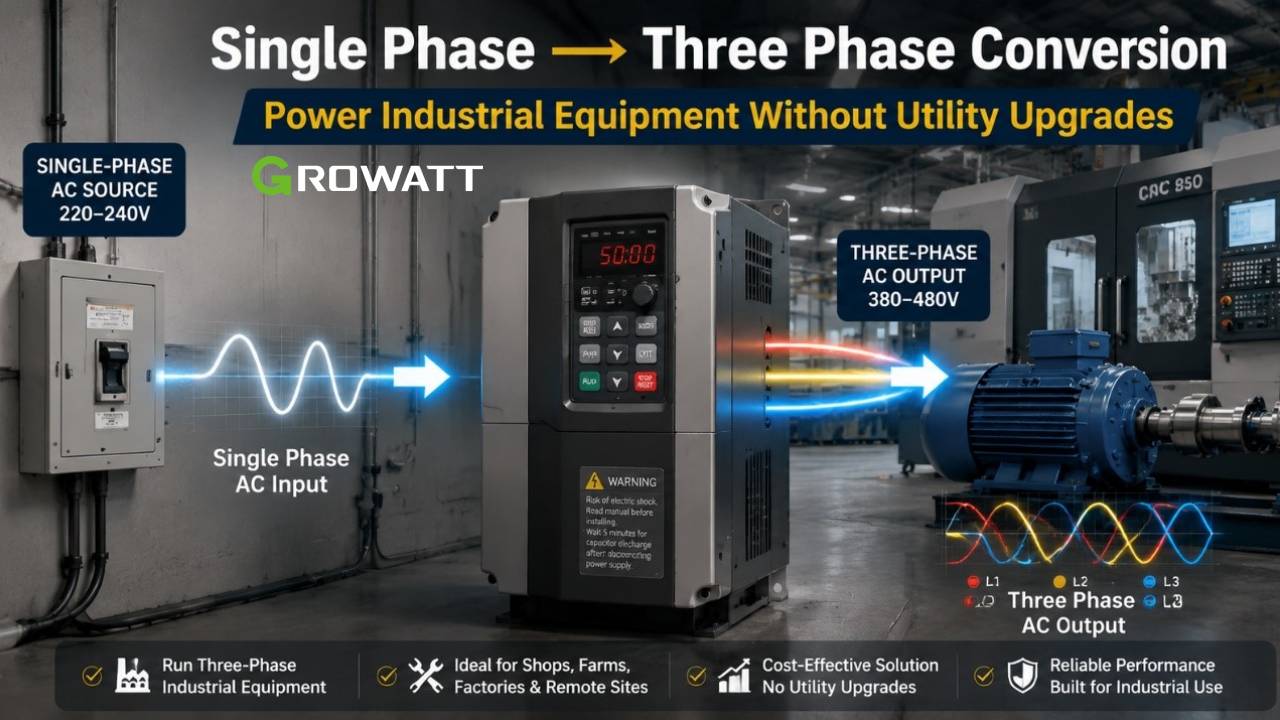
What Is a Single Phase to Three Phase Converter Inverter?
A single phase to three phase converter inverter converts standard single phase AC power (typically 220–240V) into a stable three phase AC output (typically 380–415V depending on system configuration).
This enables industrial machines such as:
- Three phase induction motors
- CNC machines
- Air compressors and industrial pumps
- Automation and manufacturing equipment
to operate reliably without requiring a costly upgrade to a three phase utility connection.
Modern systems typically use VFD (Variable Frequency Drive) technology rather than mechanical phase conversion methods, making them more efficient, compact, and reliable.
In modern systems using Solar lithium battery, this conversion is typically achieved using power electronics (VFD-based inverter technology) rather than mechanical conversion methods.
Types of Single Phase to three Phase Conversion Systems
Choosing the right conversion technology is critical for performance, efficiency, and long-term reliability.
| Conversion System | Technology | Efficiency | Best For | Relative Cost |
|---|---|---|---|---|
| VFD-Based Phase Converter | Power electronics (AC → DC → PWM-controlled 3-phase AC) | ⭐⭐⭐⭐⭐ High | Industrial motors, CNC machines, pumps, compressors, automation systems | Medium |
| Rotary Phase Converter | Mechanical idler motor generates the third phase | ⭐⭐⭐ Moderate | Workshops with multiple machines and mixed motor loads | High |
| Static Phase Converter | Electronic starting circuit creates a temporary third phase | ⭐⭐Low | Light-duty or intermittent motor applications | Low |
VFD-Based Phase Converter (Most Recommended)
A VFD-based system converts AC power into DC and then generates a controlled three phase output using PWM switching technology.
Advantages:
- Highest efficiency (up to 95–98%)
- Smooth motor control and soft start
- Built-in protection features
- Ideal for CNC, pumps, compressors, and automation systems
This is the most widely used solution in modern industrial applications.
Rotary Phase Converter
A rotary phase converter uses an idler motor to generate the missing phase.
Advantages:
- Can support multiple machines
- Works with mixed motor loads
Limitations:
- Higher mechanical wear
- Lower efficiency compared to VFD systems
- Requires more maintenance
Static Phase Converter
A basic electronic solution that provides temporary phase conversion during motor startup.
Advantages:
- Low cost
- Simple installation
Limitations:
- Not suitable for continuous operation
- Only for light-duty applications
How a VFD-Based Single Phase to Three Phase Inverter Works?
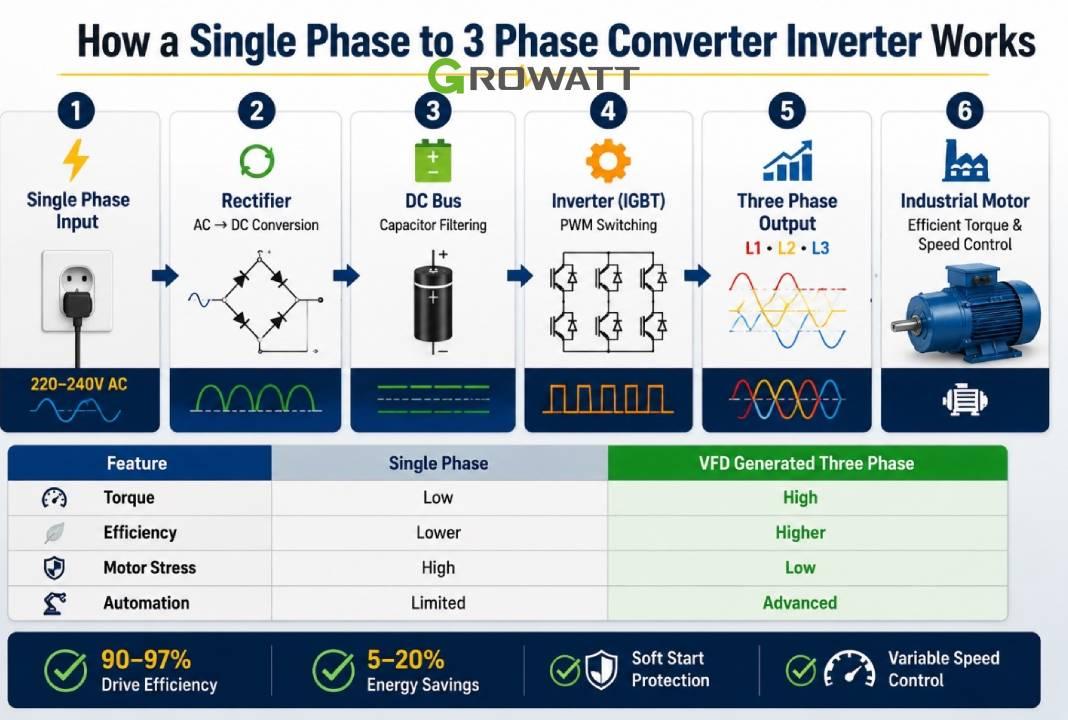
Modern systems use PWM (Pulse Width Modulation) technology to generate a stable three phase output.
Step 1: Input Stage (AC Supply)
Single phase AC power is supplied to the system.
Step 2: Rectifier Stage
The AC input is converted into DC using diodes or controlled rectifiers.
Step 3: DC Bus Filtering
Capacitors smooth the DC voltage and reduce ripple, ensuring stable energy storage.
Step 4: Inverter Stage (IGBT Switching)
IGBTs rapidly switch the DC voltage to create a synthesized three phase waveform.
Step 5: Output Control
PWM control shapes the waveform to closely approximate a sine wave, suitable for motor operation.
Step 6: Motor Operation
The motor runs with controlled speed, torque, and improved efficiency.
Important Engineering Considerations
When choosing a converter inverter system, engineers consider the following:
Type of load
- Constant torque loads (compressors, conveyors)
• Fans, pumps, variable torque loads
• High starting torque loads (CNC machines)
Power Ratings (kw / Hp)
The inverter must be properly sized to accommodate:
- Rated motor current
• Starting surge (especially for heavy loads)
Harmonic Distortion (THD) High quality systems keep:
- THD typically < 5–8% at full load
Less harmonic distortion leads to longer motor life and better system stability.
Cooling System
- Air cooled systems (normal applications)
- High power industrial systems (water cooled)
Protection Features
Modern systems include:
- Over current protection
- Protection against overvoltage
- Phase loss detection
- Thermal shutdown
Single Phase vs Three Phase Performance Comparison
|
Feature |
Single Phase Supply | Single Phase → Three Phase Inverter |
|
Power delivery |
Pulsating |
Balanced and continuous |
|
Motor efficiency |
Lower |
Higher |
|
Starting torque |
Weak |
Strong and stable |
|
Energy losses |
Higher |
Lower (optimized drive control) |
|
Automation capability |
Low |
High |
| Industrial suitability | Light-duty |
Heavy-duty |
Advantages of Using a Phase Converter Design of Inverter System
A properly designed system provides several practical advantages:
- Allows three phase machinery on single phase sites
- removes the need for utility infrastructure upgrade
- Enhanced motor control and operational stability
- Reduces mechanical stress on motor start-up
- Allows variable speed operation (using VFDs)
- Allows integration into automation and process control
Efficiency and Performance Comments (Practical Perspective)
In fact, the performance is strongly dependent on the system design and the load conditions.
Typical observed ranges in industrial environments:
- Drive efficiency: ~90%–97% (depending on load and design)
- Motor energy savings: 5%–20% in variable speed applications
- Reduced mechanical stress: significant in soft-start systems
Note:These values vary based on motor type, load profile, and installation quality.
Example of Real World Application
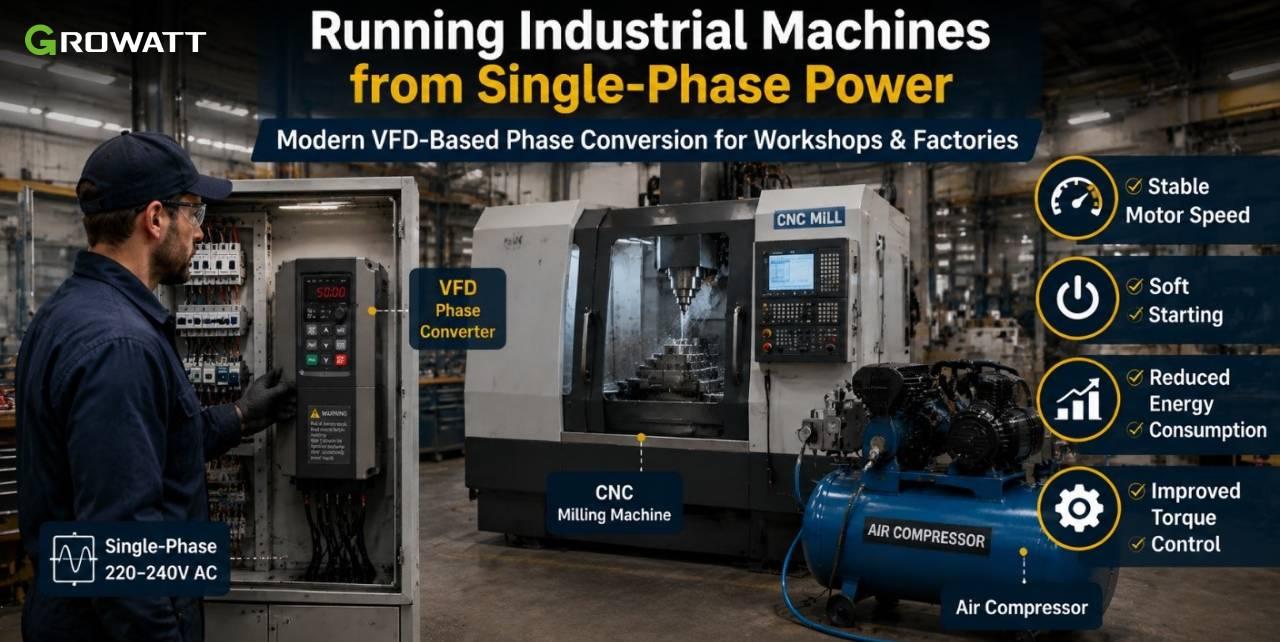
A small machining workshop using CNC milling machines upgraded from single-phase motors to a VFD-based single phase to three phase converter system.
Observed changes:
- More stable spindle speed when loaded
- Reduced motor heating
- Lower peak current on start-up
- Consistent torque output for improved machining accuracy
This is a common upgrade path in small industrial environments transitioning toward automation.
Common Issues and Troubleshooting
Overheating
Caused by:
- undersized inverter
- poor ventilation
- continuous overload
Tripping or Fault Shutdown
Often due to:
- incorrect motor parameters
- high inrush current
- unstable input supply
Motor Noise or Vibration
May result from:
- high harmonic distortion
- improper PWM settings
- incompatible motor type
Installation Considerations
Reliability depends on proper installation:
- Ensure correct earthing/grounding
- Match voltage and frequency settings to motor rating
- Avoid undersizing the inverter
- Ensure adequate airflow around the drive
- Use shielded cables for long motor runs (reduces EMI issues)
Cost Considerations
Costs vary significantly depending on:
- power rating (HP/kW)
- brand and build quality
- feature set (basic vs advanced VFD control)
For industrial buyers, it is also useful to compare system costs with current on grid inverter price trends before selecting a suitable power solution.
| Motor Power | Typical VFD Power Rating | Typical Price Range* | Common Applications |
|---|---|---|---|
| 1 HP (0.75 kW) | 0.75–1.5 kW | Entry Level | Small pumps, fans, light machinery |
| 3 HP (2.2 kW) | 2.2–3 kW | Low–Medium | Compressors, woodworking machines |
| 5 HP (3.7 kW) | 4–5.5 kW | Medium | CNC equipment, industrial pumps |
| 10 HP (7.5 kW) | 7.5–11 kW | Medium–High | Manufacturing equipment, conveyors |
| 20 HP (15 kW) | 15–18.5 kW | High | Heavy-duty industrial applications |
While initial cost is higher than basic single-phase setups, long-term savings come from:
- reduced downtime
- improved energy efficiency
- longer motor lifespan
Conclusion
A Single Phase Inverter to three Phase Inverter Converter is a practical and efficient solution for running industrial equipment in areas without three-phase power. Modern VFD-based systems offer the best combination of efficiency, control, and reliability.
By selecting the correct system type, sizing it properly, and ensuring correct installation practices, users can achieve stable operation, improved energy efficiency, and extended equipment lifespan.
Choosing the correct converter inverter depends on factors such as motor power, starting torque requirements, operating environment, and long-term efficiency goals. Whether you are upgrading an existing workshop, running CNC machinery, or powering industrial pumps and compressors, selecting a high-quality inverter can significantly improve performance and reliability.
Growatt offers a range of advanced inverter solutions designed for industrial and commercial applications. To explore suitable products, compare specifications, and receive expert guidance, visit our Growatt inverter product pages or contact our technical team for personalized recommendations.
FAQ
Yes, most three-phase induction motors can operate with a properly sized converter. However, the converter must match the motor's voltage, current, and power rating to ensure safe and efficient operation. Always follow the manufacturer's specifications when selecting a converter.
For most modern industrial applications, yes. A VFD offers higher energy efficiency, variable speed control, soft starting, and built-in protection features. Rotary phase converters are still useful for powering multiple machines simultaneously, especially in older workshops.
A VFD is generally designed to control a single motor. While multiple motors can sometimes be connected to one VFD, this requires careful system design, independent overload protection for each motor, and is not suitable for applications requiring individual speed control.
Select an inverter based on the motor's rated power (kW or HP), full-load current, operating voltage, and starting torque requirements. For heavy-duty applications such as compressors or CNC machines, choosing the next larger inverter size is often recommended.
A phase converter itself does not automatically reduce energy consumption. However, a VFD can improve overall system efficiency by matching motor speed to the load, reducing unnecessary energy use in variable-speed applications such as pumps and fans. Can a single phase to three phase converter run any three-phase motor?
Is a VFD better than a rotary phase converter?
Can one VFD power multiple motors?
How do I choose the correct inverter size?
Does a phase converter reduce energy consumption?