Author’s Note
This review is based on Growatt’s published specifications, feedback shared by installers who work with these systems regularly, and the experiences many owners have reported after months or years of use. Every solar installation is different, so actual performance depends on factors like inverter compatibility, battery sizing, local weather, and the quality of the installation itself.
Overall Rating: 4.6/5
| Category | Rating |
|---|---|
| Performance | ⭐⭐⭐⭐⭐ |
| Reliability | ⭐⭐⭐⭐☆ |
| Battery Life | ⭐⭐⭐⭐⭐ |
| Installation | ⭐⭐⭐⭐☆ |
| Safety | ⭐⭐⭐⭐⭐ |
| Monitoring App | ⭐⭐⭐⭐☆ |
| Value for Money | ⭐⭐⭐⭐⭐ |
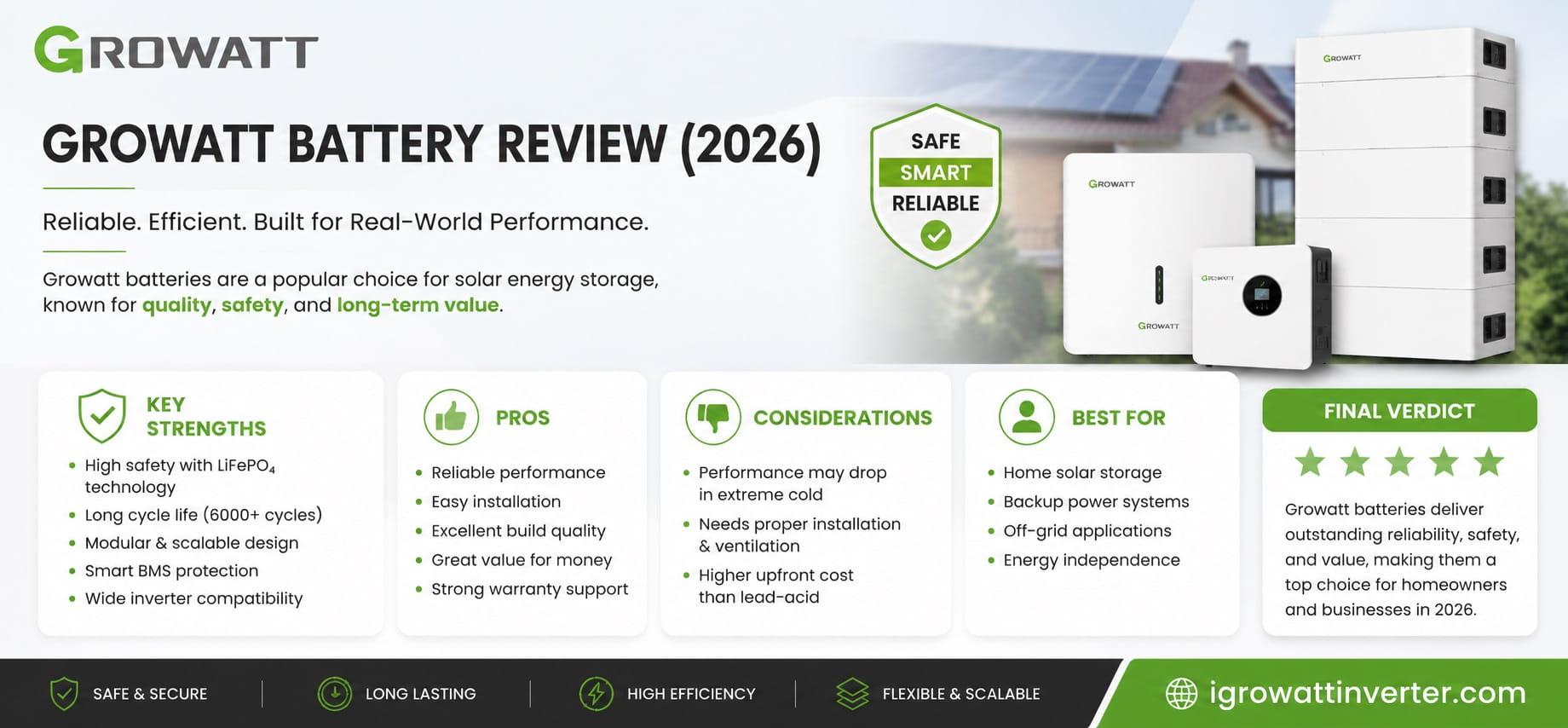
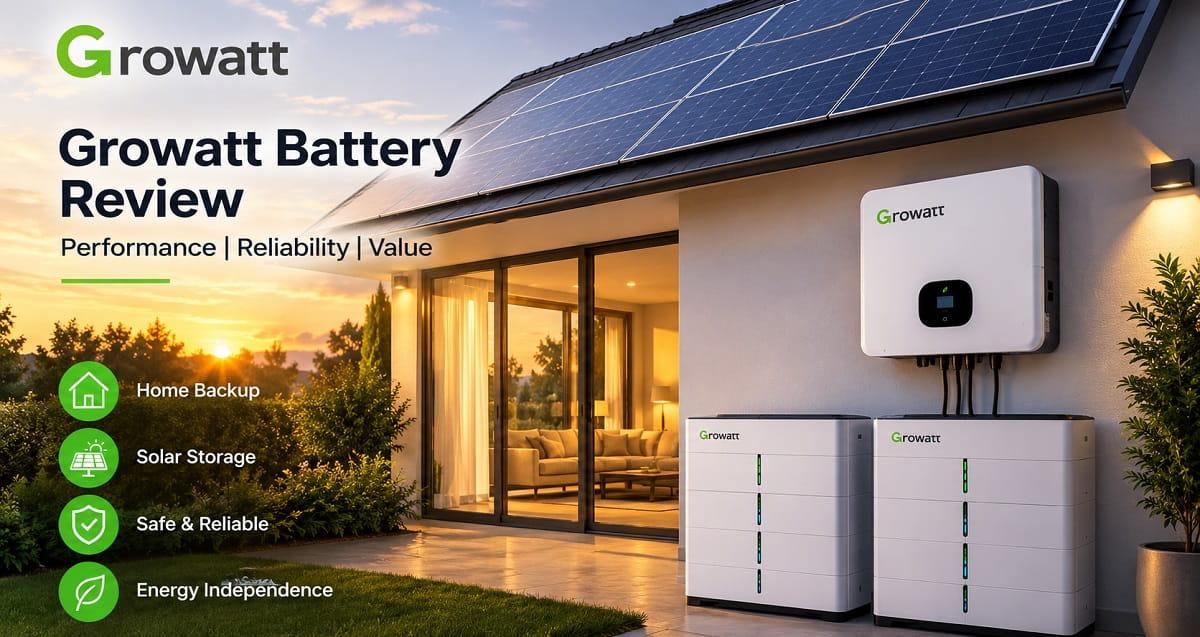
Growatt Battery Review
If you’ve been researching solar batteries lately, chances are you’ve come across Growatt more than once. The brand has become a familiar name in residential energy storage, and for good reason. Their batteries show up in everything from small backup systems to larger home installations where energy independence is a priority.
So, are they actually a good investment?
After looking through Growatt’s current battery lineup, reviewing the technical specifications, comparing warranty terms, and considering what installers and long-term users tend to say, the answer is generally yes—especially if you’re already using a Growatt inverter.
They’re not perfect. No battery system is.
But they offer a combination of performance, expandability, and pricing that’s difficult to ignore in today’s residential solar market.
Quick Verdict
Growatt batteries make a lot of sense for homeowners or businesses that need dependable energy storage without paying premium-brand prices.
They’re particularly well suited for:
- Residential solar systems
- Backup power during grid outages
- Off-grid homes and cabins
- Commercial energy storage projects
- Expanding an existing Growatt battery bank over time
On the other hand, they may not be the right choice if your current inverter isn’t compatible or if you’re designing a very large commercial installation that requires enterprise-level storage solutions with advanced management features.
Why So Many People Choose Growatt Batteries
Price is usually the first thing people notice.
Growatt has managed to position itself somewhere between entry-level products and expensive premium brands. You still get modern battery technology, modular expansion, and good efficiency, but the overall system cost is often noticeably lower than some well-known competitors.
That alone gets people’s attention.
There’s another reason installers like working with them, though. When a Growatt battery is paired with a compatible Growatt hybrid inverter, setup tends to be straightforward. Communication between the devices is already optimized, which means fewer compatibility headaches and a cleaner installation process.
For many installers, that translates into less time on site and fewer support calls later.
Battery Technology
Growatt’s current residential batteries are built around Lithium Iron Phosphate (LiFePO₄) cells.
This chemistry has earned a solid reputation across the solar industry, largely because it prioritizes safety and long-term durability over squeezing out the highest possible energy density.
Some of the biggest advantages include:
- Excellent thermal stability
- Lower risk of overheating compared with several other lithium chemistries
- Long cycle life
- High charging and discharging efficiency
- Deep discharge capability without significantly reducing battery lifespan
Those characteristics explain why LiFePO₄ has become the preferred choice for many modern home energy storage systems.
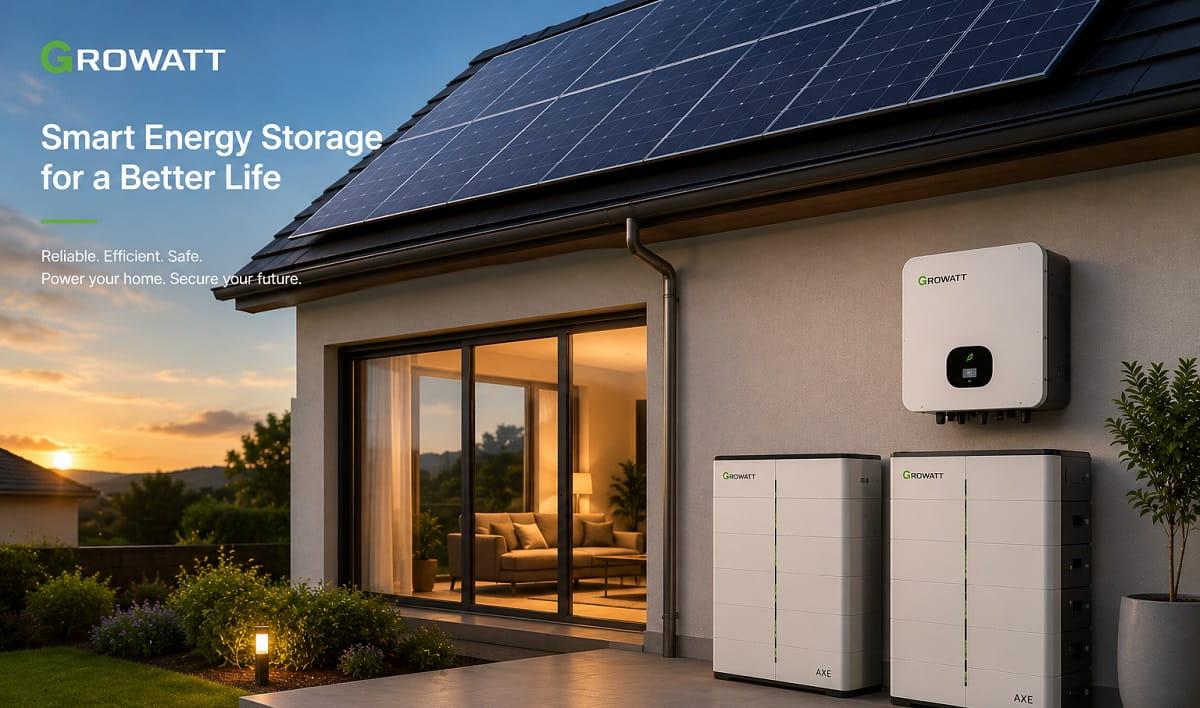
Growatt Battery Series
Growatt doesn’t rely on a single battery platform. Instead, it offers several product families, each designed for a slightly different type of installation.
AXE LV Battery
The AXE LV series is aimed primarily at low-voltage residential systems, particularly homes using Growatt’s SPF off-grid inverter range.
Some of its stronger points include:
- Modular capacity expansion
- Straightforward installation
- Flexible system sizing
- Suitable for indoor installations
Because additional modules can be added later, homeowners don’t necessarily need to purchase their maximum storage capacity on day one.
AXE HV Battery
The AXE HV lineup targets high-voltage systems where efficiency and power delivery become more important.
These batteries are commonly used with Growatt hybrid inverters in larger residential installations.
Key benefits include:
- Higher operating efficiency
- Faster charging performance
- Better support for larger household loads
- Well suited for homes with greater daily energy consumption
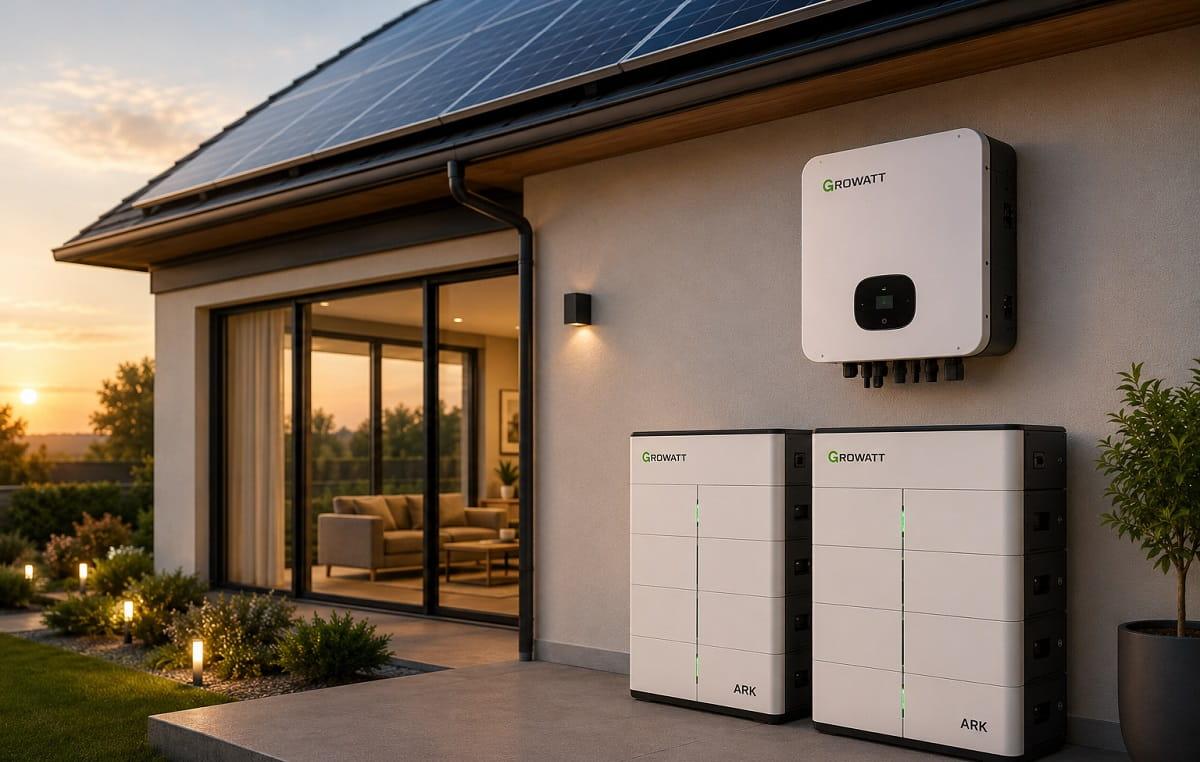
ARK Battery Series
Among Growatt’s residential products, the ARK series is probably one of the most recognizable.
Its modular stackable design makes future expansion relatively simple, which is something many homeowners appreciate once their electricity usage starts growing.
Other notable features include:
- Stackable battery modules
- Expandable storage capacity
- IP65-rated enclosure for improved environmental protection
- Long warranty coverage
- Clean, modern appearance that blends well with residential installations
Performance Review
Charging Speed
One area where Growatt batteries consistently receive positive feedback is charging performance. When there’s enough solar production available, they recharge surprisingly well, making good use of the energy coming from the panels instead of leaving potential generation unused.
Of course, charging speed isn’t determined by the battery alone. Several factors influence how quickly it fills back up, including:
- Solar array size
- Solar inverter output
- Daily weather conditions
- Current battery charge level
On a bright day with a properly sized system, charging is rarely something owners complain about.
Rating: ⭐⭐⭐⭐⭐
Backup Power Performance
For many homeowners, the real test comes when the grid goes down.
This is where Growatt batteries generally leave a good impression. Power transitions are usually quick enough that lights, routers, refrigerators, and other essential appliances continue running with little interruption. In everyday use, most people never notice the switch happen.
Users frequently mention:
- Fast automatic changeover
- Stable output voltage
- Quiet operation
- Dependable backup during outages
If reliable backup power is your main priority, this is easily one of Growatt’s strongest selling points.
Rating: ⭐⭐⭐⭐⭐
Does the Battery Deliver Its Advertised Capacity?
It’s a question almost every buyer asks.
Can you actually use the capacity printed on the specification sheet?
In most real-world installations, the answer is fairly close to yes. Because Growatt uses LiFePO₄ cells, the batteries can safely operate with a deep depth of discharge, meaning a large percentage of the stored energy is genuinely usable.
Actual runtime still varies from one home to another. Factors such as these make a noticeable difference:
- The amount of power your appliances are drawing
- Outdoor and battery temperature
- Battery age after years of use
- Overall inverter efficiency
So while the rated capacity is realistic, the number of hours it powers your home will always depend on how much electricity you’re consuming.
Battery Lifespan
Long service life is one of the reasons Growatt continues to attract homeowners looking beyond the initial purchase price.
Most residential models are rated for over 6,000 charge cycles, although the exact figure depends on the battery series and operating conditions. Under normal daily use, that often translates into an expected lifespan somewhere around 15 to 20 years.
Installers often point to this as one of the better long-term advantages of the system. A battery that lasts well over a decade can significantly improve the overall value of a solar installation.
Build Quality
Physically, Growatt batteries feel well put together.
They’re not flashy, but they don’t need to be. The design is clean, practical, and clearly intended for long-term residential use rather than showroom appeal.
Some positives that come up repeatedly include:
- Solid metal enclosure
- Good-quality cables
- Secure connectors
- Compact design that doesn’t waste much space
There are a couple of practical drawbacks, though.
Once you move into larger-capacity systems, individual components become quite heavy. Installation isn’t especially difficult, but it’s definitely not a one-person DIY job in most cases. Professional installation remains the safer option.
Overall Rating: ⭐⭐⭐⭐☆
Installation Experience
From an installer’s perspective, Growatt systems are usually straightforward to work with—especially when everything in the system comes from the same manufacturer.
The modular design keeps things organized, and communication between compatible Growatt batteries and inverters is generally automatic.
Some of the features installers appreciate include:
- Stackable battery modules
- Well-written installation manuals
- Plug-and-play communication
- Easy expansion if more storage is needed later
That said, there are a couple of things worth checking before installation begins.
Firmware updates occasionally become necessary, and it’s always worth confirming battery-to-inverter compatibility before ordering equipment. Spending a few extra minutes verifying compatibility can save a lot of frustration later.
Expandability
One feature that makes Growatt attractive for homeowners planning ahead is its modular approach.
Instead of buying your maximum storage capacity on day one, you can start with a smaller battery bank and expand it as your electricity needs grow. Maybe an electric vehicle arrives in a few years, or energy usage increases after adding air conditioning. The system can often grow alongside those changes.
For many households, that flexibility makes budgeting much easier.
Rating: ⭐⭐⭐⭐⭐
Mobile App Review
Growatt’s monitoring platform gives owners a clear picture of what their solar system is doing throughout the day.
From the app, users can monitor:
- Battery charge percentage
- Solar energy production
- Household electricity consumption
- Grid import and export
- Historical performance data
For everyday monitoring, it does the job well.
Some owners have mentioned occasional delays in data updates, usually following firmware upgrades or temporary internet connection problems. Those reports exist, but they don’t appear to be widespread or permanent issues.
Rating: ⭐⭐⭐⭐☆
Noise Level
If you’ve ever lived with a fuel generator, you’ll immediately notice the difference.
The battery itself operates silently. No humming. No vibration. Nothing you’ll hear during normal operation.
The only sound most systems produce comes from the inverter’s cooling fans, and even then, they’re typically noticeable only when the system is handling heavier electrical loads.
Safety Review
Safety has become one of the biggest reasons homeowners choose LiFePO₄ batteries, and Growatt builds on that with multiple layers of electronic protection.
Depending on the model, you’ll typically find safeguards such as:
- Over-voltage protection
- Under-voltage protection
- Over-current protection
- Temperature monitoring
- Short-circuit protection
- Integrated Battery Management System (BMS)
Combined with the inherent stability of LiFePO₄ chemistry, the overall safety package is reassuring for residential use.
Rating: ⭐⭐⭐⭐⭐
Efficiency
Efficiency isn’t the kind of specification most homeowners think about at first, yet it affects the system every single day.
Growatt batteries generally achieve high round-trip efficiency, which means a larger portion of the energy stored during the day is available when you actually need it later. Less energy is lost between charging and discharging, helping homeowners get more usable electricity from the same amount of solar production.
It’s not the most exciting feature on the specification sheet.
Over the years, though, those small efficiency gains quietly add up.
Cold Weather Performance
Cold temperatures affect every lithium battery to some degree, and Growatt is no exception.
If your solar system operates in regions with long winters or frequent sub-zero temperatures, you can expect a small drop in performance during the coldest days of the year. That’s normal and isn’t unique to Growatt.
In practical use, homeowners may notice:
- Charging slows down in low temperatures.
- Available battery capacity is slightly reduced.
- Charging below freezing becomes more limited until the battery warms up.
The good news is that these effects can usually be minimized. Installing the battery indoors or in a protected location where temperatures remain more stable helps maintain better performance throughout winter.
Performance in Hot Climates
Growatt batteries are generally well suited to warm environments, which is good news for homeowners in sunny regions where solar systems typically produce the most energy.
The built-in Battery Management System (BMS) constantly monitors operating temperatures and adjusts battery operation when necessary to keep everything within a safe range.
That doesn’t mean placement should be ignored, though.
Most experienced installers still recommend avoiding direct afternoon sunlight whenever possible and providing adequate airflow around the battery cabinet. A little ventilation goes a long way, especially during long summer heatwaves.
Warranty
Warranty coverage varies depending on both the battery model and the country where it’s sold.
For most residential products, Growatt offers warranty protection of up to 10 years, although the exact terms can differ between markets and distributors.
Before buying, it’s worth spending a few minutes reading the warranty conditions for your region. Details such as throughput limits, installation requirements, or registration procedures can vary, and understanding them early helps avoid surprises later.
What Owners Like Most
After reading through installer feedback and owner experiences, a few strengths come up again and again.
People often mention:
- Reliable backup power during outages
- Silent day-to-day operation
- Long expected battery life
- Easy-to-use monitoring app
- Modular design for future expansion
- Competitive pricing for the features offered
- Strong charging efficiency
- Excellent compatibility with Growatt inverters
None of these points alone make the battery stand out.
Taken together, they explain why Growatt has become a common recommendation for residential solar systems.
Common Complaints
No product is free from criticism, and Growatt batteries are no different.
The issues people mention are usually practical rather than serious.
Some of the more common observations include:
- The best experience is achieved when the battery is paired with Growatt equipment.
- Compatibility with certain third-party inverters should always be verified before purchase.
- Firmware updates occasionally need to be installed.
- Larger battery banks require more installation space than some buyers initially expect.
For most installations, these aren’t deal-breakers. They’re simply things worth planning for before the system goes in.
Who Is a Growatt Battery Best Suited For?
Growatt isn’t necessarily the right battery for everyone, but it fits a wide range of residential solar projects.
It’s a particularly good choice if you:
- Want to use more of the solar energy your panels generate.
- Need dependable backup power during utility outages.
- Expect your storage needs to grow over the next few years.
- Already have a compatible Growatt inverter.
- Want a balance between price, performance, and long-term reliability rather than paying extra for a premium brand.
Overall Thoughts
After looking at the specifications on paper and comparing them with what installers and long-term users commonly report, Growatt leaves a positive overall impression.
The batteries combine proven LiFePO₄ technology with a modular design that’s easy to expand later, and they integrate particularly well with the company’s own inverter lineup. For most residential systems—and many small commercial projects—that combination covers what buyers actually care about: dependable backup power, reasonable efficiency, and a battery that’s expected to last for many years.
There are a few compromises.
Firmware updates occasionally come up, and checking compatibility becomes more important if you’re mixing equipment from different manufacturers. Even so, those issues are relatively minor compared with the overall ownership experience.
For homeowners building a new solar installation or adding storage to an existing Growatt system, these batteries deserve a place on the shortlist.
Overall Rating: 4.6 / 5
Frequently Asked Questions
Are Growatt batteries reliable?
Generally, yes. When they’re installed correctly and paired with compatible equipment, Growatt batteries have built a reputation for dependable day-to-day performance. Installers who work with the brand regularly often recommend them for residential systems because long-term reliability has been consistently good.
How long do Growatt batteries typically last?
Most residential models are rated for more than 6,000 charge cycles. Under normal household use, that usually translates to an expected service life of around 15 to 20 years, although usage patterns and environmental conditions will always have some influence.
Are Growatt batteries safe?
Yes.
Growatt uses Lithium Iron Phosphate (LiFePO₄) cells, which are widely regarded as one of the safest lithium battery chemistries available for residential energy storage. The batteries also include an integrated Battery Management System (BMS) that continuously monitors voltage, temperature, charging, and overall system protection.
Can I increase the storage capacity later?
In most cases, you can.
Many Growatt battery series are designed with a modular architecture, allowing additional battery modules to be added as household energy requirements grow. That flexibility means you don’t necessarily need to invest in your maximum storage capacity from the beginning.
Are Growatt batteries worth buying?
For many homeowners, the answer is yes.
They may not be the cheapest batteries on the market, nor are they positioned as ultra-premium enterprise storage systems. Instead, Growatt sits comfortably in the middle, offering a combination of solid performance, good safety, expandable capacity, and competitive pricing that represents strong overall value for residential solar installations.